EN
EN



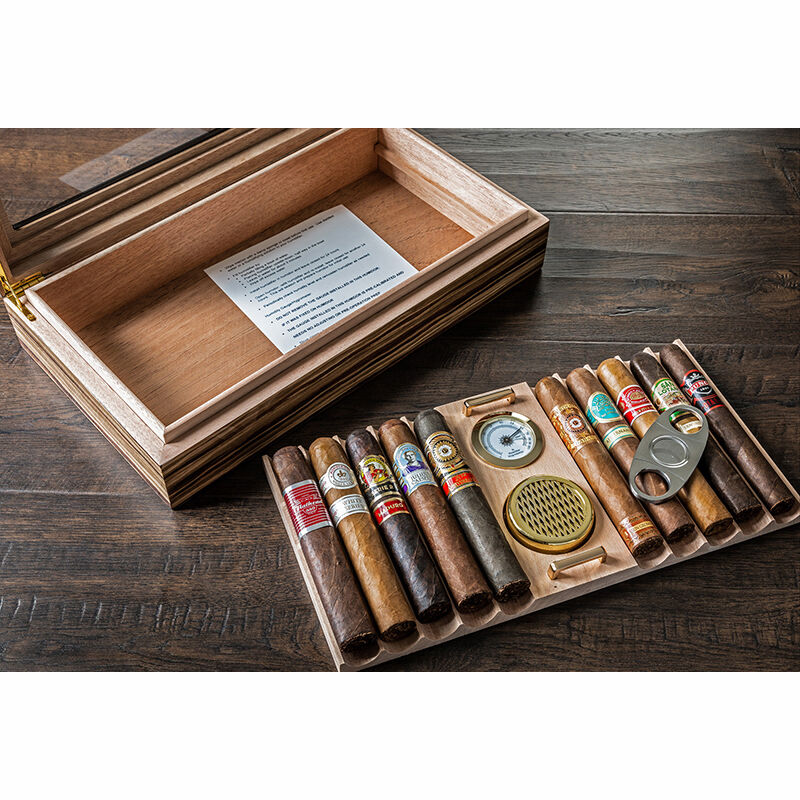
A cigar humidor represents one of the most essential investments for any serious cigar enthusiast, serving as a sophisticated storage system designed to maintain the perfect environment for premium tobacco. Understanding how a cigar humidor works involves grasping the delicate balance of humidity, temperature, and airflow that these specialized containers provide. The fundamental principle behind humidor functionality centers on creating a microclimate that mimics the tropical conditions where tobacco naturally thrives, ensuring your cigars retain their intended flavor profile, burn characteristics, and overall quality for extended periods.
Essential Components of Cigar Humidor Systems
Humidification Elements and Mechanisms
The heart of any functional cigar humidor lies in its humidification system, which typically consists of either passive or active moisture-generating components. Traditional passive humidifiers utilize propylene glycol solutions or distilled water absorbed into foam, crystals, or specialized polymers that slowly release moisture into the enclosed environment. These systems work through natural evaporation, creating a steady source of humidity that maintains optimal storage conditions without requiring electrical power or complex maintenance procedures.
Active humidification systems represent the more sophisticated approach, incorporating electronic sensors, fans, and automated moisture delivery mechanisms that precisely control humidity levels. These advanced systems monitor environmental conditions continuously and adjust moisture output accordingly, ensuring consistent performance regardless of external temperature fluctuations or seasonal changes. The precision offered by active systems makes them particularly valuable for larger humidors or commercial applications where maintaining exact specifications becomes critical for preserving valuable cigar collections.
Sealing Technology and Vapor Barriers
Effective sealing mechanisms form the foundation of humidor functionality, preventing moisture loss and maintaining the controlled environment necessary for proper cigar storage. Quality humidors incorporate precision-fitted joints, gaskets, and weatherstripping materials designed to create airtight seals that minimize air exchange with external environments. The seal quality directly impacts the humidor's ability to maintain stable humidity levels, with even minor gaps potentially compromising the entire storage system's effectiveness.
Spanish cedar lining serves dual purposes in humidor construction, providing both aesthetic appeal and functional moisture regulation properties. This specialized wood naturally absorbs and releases moisture gradually, acting as a buffer system that helps stabilize humidity fluctuations and prevents rapid environmental changes that could damage stored cigars. The cedar's natural oils also contribute antimicrobial properties and impart subtle aromatic characteristics that enhance the aging process of premium tobacco products.
Humidity Control Mechanisms and Optimal Levels
Target Humidity Ranges for Different Cigar Types
Maintaining proper humidity levels represents the most critical aspect of cigar humidor operation, with optimal ranges typically falling between 65% and 75% relative humidity depending on specific cigar types and personal preferences. Cuban cigars often perform best at slightly higher humidity levels around 70-72%, while many non-Cuban premium cigars maintain excellent condition at 65-68% relative humidity. These precise ranges ensure the tobacco remains pliable enough for proper construction while preventing excessive moisture that could lead to burn problems or mold development.
The relationship between humidity and temperature creates additional complexity in humidor management, as warmer conditions can support higher humidity levels while cooler environments require more conservative moisture content to prevent condensation issues. Understanding this dynamic relationship helps humidor operators make informed adjustments that optimize storage conditions for their specific climate and cigar preferences, ensuring consistent results throughout different seasons and environmental conditions.
Monitoring and Adjustment Techniques
Accurate humidity monitoring requires reliable hygrometer instruments calibrated to provide precise readings within the narrow ranges critical for cigar storage. Digital hygrometers typically offer superior accuracy compared to analog alternatives, with some advanced models providing data logging capabilities that track humidity trends over extended periods. Regular calibration using salt testing methods ensures measurement accuracy, as even small discrepancies in humidity readings can lead to storage conditions that compromise cigar quality over time.
Adjustment techniques for maintaining optimal humidity involve both proactive and reactive approaches, depending on the specific humidification system employed and environmental factors affecting the storage space. Adding or removing moisture sources, adjusting ventilation, and modifying the frequency of humidor opening all impact internal conditions and require careful consideration to maintain stable environments that support long-term cigar preservation and proper aging characteristics.
Temperature Management and Climate Control
Ideal Temperature Parameters
Temperature control in cigar humidor systems requires maintaining consistent conditions typically between 65°F and 70°F to ensure optimal tobacco preservation and prevent various storage-related problems. Higher temperatures accelerate aging processes and increase the risk of tobacco beetle infestations, while lower temperatures can cause oils in the tobacco to congeal and affect flavor development. The narrow temperature range reflects the delicate nature of premium cigars and the precision required for maintaining their intended characteristics throughout extended storage periods.
Seasonal temperature variations present ongoing challenges for humidor management, particularly in regions experiencing significant climate changes throughout the year. Effective temperature management often involves strategic placement of humidors away from direct sunlight, heating systems, and air conditioning vents that could create temperature fluctuations harmful to stored cigars. Some enthusiasts invest in climate-controlled storage areas or wine cooler conversions specifically designed to maintain consistent temperatures regardless of external conditions.
Thermal Insulation and Stability
Insulation properties of humidor construction materials significantly impact temperature stability and energy efficiency in maintaining optimal storage conditions. Thick wooden walls, quality gaskets, and proper construction techniques help minimize temperature transfer from external environments, reducing the workload on climate control systems and improving overall performance consistency. Mass and thermal capacity of the humidor itself contribute to temperature stability, with larger units typically maintaining more consistent conditions than smaller desktop models.
Strategic thermal management involves understanding heat sources within and around the storage area, including lighting systems, electronic components, and nearby appliances that might affect internal temperatures. Proper ventilation design ensures adequate air circulation without creating drafts that could destabilize the controlled environment, while thermal barriers help isolate the storage space from external temperature influences that could compromise cigar quality over extended periods.
Airflow Dynamics and Ventilation Systems
Circulation Patterns and Air Movement
Proper airflow management within cigar humidor systems prevents stagnation that could lead to mold growth or uneven humidity distribution throughout the storage space. Gentle air circulation helps distribute moisture evenly while preventing the formation of microclimates that could create inconsistent storage conditions for different areas within the same humidor. The circulation system must balance adequate air movement with minimal disruption to the controlled environment, ensuring stability while promoting healthy storage conditions.
Natural convection currents created by slight temperature differences within the humidor contribute to air movement without requiring mechanical assistance in well-designed systems. Strategic placement of humidification elements and careful attention to internal layout optimization help establish beneficial circulation patterns that support uniform conditions throughout the storage area. Understanding these natural air movement patterns allows for more effective humidor organization and improved overall performance.
Ventilation Control and Fresh Air Exchange
Controlled ventilation systems in advanced humidors manage fresh air exchange while maintaining environmental stability, preventing the accumulation of stagnant air that could negatively impact stored cigars. Minimal air exchange helps remove potential contaminants and ensures oxygen availability for proper aging processes without compromising the carefully maintained humidity and temperature conditions. The ventilation rate must be carefully balanced to provide adequate freshness without destabilizing the controlled environment.
Filtration components in ventilation systems help remove airborne particles and potential contaminants that could affect cigar quality or introduce unwanted flavors during the aging process. These systems work in conjunction with the humidor's sealing mechanisms to maintain clean, controlled conditions that support optimal tobacco preservation and development of complex flavor profiles over extended storage periods.
Wood Selection and Interior Design
Spanish Cedar Properties and Benefits
Spanish cedar remains the gold standard for humidor interior construction due to its unique combination of moisture management properties, natural antimicrobial characteristics, and neutral aromatic profile that complements rather than competes with tobacco flavors. The wood's cellular structure allows it to absorb excess moisture during high humidity periods and release stored moisture when conditions become too dry, creating a natural buffering system that helps stabilize environmental conditions within the storage space.
The natural oils present in Spanish cedar provide additional benefits including resistance to insects, particularly tobacco beetles that can devastate cigar collections if left unchecked. These oils also contribute subtle aromatic qualities that enhance the aging process without overwhelming the delicate flavor profiles of premium cigars. The wood's stability and resistance to warping ensure long-term structural integrity even under the constant humidity exposure typical of humidor environments.
Alternative Wood Options and Treatments
Alternative wood species used in humidor construction include mahogany, cherry, and various exotic hardwoods that offer different aesthetic and functional characteristics while maintaining the basic requirements for cigar storage applications. These alternatives often require specific treatments or sealers to achieve moisture management properties similar to Spanish cedar, and careful consideration of their natural oils and aromatic properties to ensure compatibility with tobacco storage requirements.
Treatment processes for alternative woods may include kiln drying, chemical stabilization, or specialized finishes designed to optimize moisture management capabilities while preserving the wood's natural beauty and structural integrity. Understanding the properties and limitations of different wood species helps consumers make informed decisions about humidor construction that align with their specific storage needs and aesthetic preferences while ensuring optimal performance for cigar preservation.
FAQ
How long does it take to season a new cigar humidor
Seasoning a new cigar humidor typically requires 1-2 weeks of preparation time to properly condition the Spanish cedar interior and establish stable humidity levels before storing cigars. The process involves wiping down interior surfaces with distilled water, placing bowls of distilled water inside the humidor, and gradually introducing humidification elements while monitoring humidity levels daily. Proper seasoning prevents the dry wood from absorbing moisture from stored cigars and ensures the humidor will maintain consistent conditions once fully operational.
What happens if humidity levels are too high or too low
Excessive humidity above 75% can lead to mold growth, wrapper cracking from over-expansion, and burn problems that affect the smoking experience, while humidity levels below 60% cause cigars to dry out, become brittle, and lose essential oils that contribute to flavor complexity. Both extremes can permanently damage cigars and result in significant financial losses for collectors with valuable tobacco investments. Maintaining proper humidity levels between 65-72% ensures optimal preservation and aging characteristics that enhance rather than degrade cigar quality over time.
How often should I open my humidor to check on cigars
Opening a humidor should be limited to necessary access for cigar selection or maintenance activities, typically no more than once daily for active collectors, as frequent opening disrupts the controlled environment and causes humidity fluctuations that stress stored tobacco. Each opening allows conditioned air to escape and introduces external air that must be reconditioned by the humidification system, temporarily destabilizing optimal storage conditions. Monitoring can be accomplished through external hygrometer readings and regular visual inspections during planned access periods rather than frequent checking that compromises environmental stability.
Can I store different types of cigars together in the same humidor
Storing different cigar types together is generally acceptable provided they share similar humidity requirements and storage preferences, though some enthusiasts prefer separate storage for different brands or origins to prevent flavor cross-contamination over extended aging periods. Strong-flavored cigars like maduro or Connecticut broadleaf varieties may impart subtle aromatic influences on milder cigars stored in the same environment, which some consider beneficial for aging while others prefer to maintain distinct flavor profiles. Using cedar dividers or separate compartments within larger humidors allows for organization while maintaining shared environmental controls that benefit all stored cigars.