EN
EN




Wholesale buyers in the premium cigar accessory market face a critical challenge: selecting cigar match options that deliver unwavering quality across large order volumes while maintaining cost efficiency and brand reputation. The decision between traditional wooden matches, specialty cigar matches, and integrated accessory sets directly impacts customer satisfaction, repeat purchase rates, and long-term profitability. Understanding which cigar match configurations provide the most reliable performance standards requires examining material consistency, ignition chemistry, burn rate uniformity, and packaging integrity across production batches.
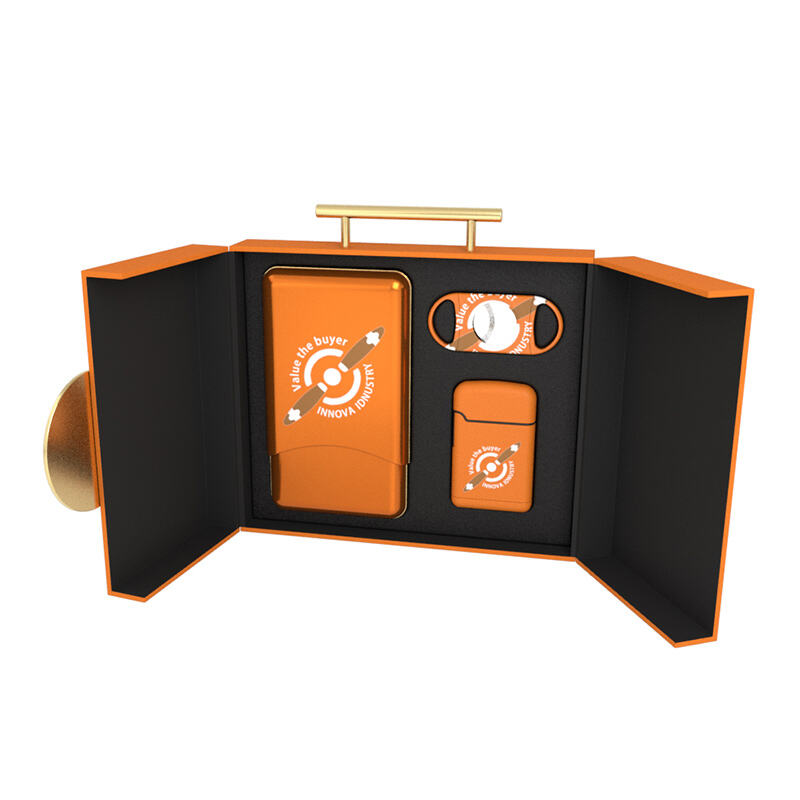
For distributors and retailers operating in wholesale environments, the selection criteria extend far beyond simple price comparison. Quality consistency in cigar match products determines whether your business maintains its market position or suffers from customer complaints, product returns, and damaged relationships with high-value accounts. This article examines the specific cigar match options that have proven track records in wholesale settings, analyzing the material specifications, manufacturing processes, quality control protocols, and packaging solutions that separate reliable suppliers from inconsistent ones. By understanding these selection factors, wholesale buyers can make informed decisions that protect their investment and ensure their customers receive the premium experience they expect.
Material Composition Standards That Define Cigar Match Reliability
Wood Species Selection and Moisture Content Control
The foundation of any quality cigar match begins with the wood species used in production. Wholesale buyers must prioritize suppliers who use select hardwoods such as aspen or white pine, which provide consistent density and minimal resin content. These wood types ensure uniform ignition characteristics across entire production runs, eliminating the frustrating variability that plagues lower-grade cigar match products. The moisture content of the wood stock directly impacts match performance, with optimal specifications ranging between eight and twelve percent. Suppliers who maintain climate-controlled storage facilities and implement regular moisture testing demonstrate the quality control infrastructure necessary for wholesale consistency.
Beyond basic wood selection, the dimensional precision of match sticks reveals manufacturing sophistication. Quality cigar match producers maintain stick diameter tolerances within 0.1 millimeters, ensuring even chemical coating adhesion and predictable burn rates. This precision becomes particularly important when cigar match products are bundled within accessory sets, where visual uniformity contributes to perceived value. Wholesale buyers should request detailed specifications regarding wood sourcing, including origin certificates and moisture content documentation, to verify that suppliers maintain the standards necessary for consistent performance across large order volumes.
Chemical Composition of Strike Surfaces and Match Heads
The chemistry of cigar match ignition systems separates premium products from basic alternatives. Safety match formulations, which require specific strike surfaces, offer superior control over accidental ignition during shipping and storage, a critical consideration for wholesale operations handling large volumes. The match head composition should incorporate potassium chlorate, sulfur, and binders in precise ratios that ensure reliable ignition without excessive sparking or odor production. Premium cigar match manufacturers often add proprietary compounds that extend the initial flame duration, giving cigar enthusiasts adequate time to achieve even lighting without rushing.
The strike surface chemistry equally impacts cigar match performance consistency. Quality formulations combine red phosphorus, powdered glass, and binding agents in ratios that maintain effectiveness across varying humidity conditions and storage durations. Wholesale buyers should verify that suppliers conduct batch testing of both match heads and strike surfaces, with documentation showing ignition success rates exceeding ninety-eight percent. This level of quality assurance becomes essential when your reputation depends on delivering cigar match products that perform flawlessly for end users, particularly in premium market segments where customer expectations run high.
Length Specifications and Their Impact on User Experience
Match length represents a frequently overlooked specification that significantly affects customer satisfaction in cigar lighting applications. Standard cigar match products typically measure between 100 and 120 millimeters, providing sufficient distance between the flame and user's fingers during the lighting process. However, wholesale buyers serving premium market segments should consider longer formats ranging from 150 to 200 millimeters, which offer enhanced safety margins and more elegant presentation. These extended-length cigar match options command higher price points but deliver measurably better user experiences, reducing complaints and returns while supporting premium positioning strategies.
The relationship between match length and packaging design creates additional considerations for wholesale buyers. Longer cigar match formats require specialized containers that protect the extended sticks from breakage during transportation and storage. Suppliers who offer integrated packaging solutions, combining appropriately sized protective cases with properly proportioned matches, demonstrate the holistic thinking necessary for wholesale success. These comprehensive cigar match systems reduce handling damage rates, minimize presentation inconsistencies, and simplify inventory management for distributors managing multiple product lines across diverse retail accounts.
Manufacturing Process Indicators of Wholesale-Grade Quality
Production Volume Capacity and Batch Consistency Protocols
A supplier's manufacturing capacity directly correlates with their ability to maintain quality consistency across large wholesale orders. Facilities equipped with automated dipping systems for match head application achieve far more uniform chemical distribution than manual or semi-automated alternatives. When evaluating cigar match suppliers for wholesale relationships, buyers should inquire about daily production volumes, typical batch sizes, and the quality control checkpoints integrated throughout the manufacturing process. Suppliers capable of producing 500,000 or more cigar match units daily while maintaining documented quality standards demonstrate the scalability necessary for reliable wholesale partnerships.
Batch consistency protocols reveal a manufacturer's commitment to quality maintenance across extended production runs. Premium cigar match producers implement sample testing at regular intervals throughout each production batch, typically extracting test samples every 10,000 units for ignition performance verification. These samples undergo standardized testing including ignition success rate measurement, burn time evaluation, and flame characteristic assessment. Wholesale buyers should request access to batch testing documentation from recent production runs, looking for consistency indicators such as standard deviation measurements in burn times and ignition success rates that remain above industry benchmarks throughout entire production cycles.
Quality Control Infrastructure and Testing Methodologies
The sophistication of a manufacturer's quality control infrastructure provides critical insights into their ability to deliver consistent cigar match products at wholesale scales. Dedicated testing laboratories equipped with climate-controlled environments, precision measurement instruments, and standardized testing protocols separate serious manufacturers from basic production operations. Key testing capabilities should include humidity chamber testing to verify performance across varying storage conditions, accelerated aging tests to predict shelf life characteristics, and comparative ignition testing against established benchmark standards. These capabilities ensure that cigar match products maintain performance consistency not just at production time, but throughout their entire distribution lifecycle.
Advanced manufacturers implement statistical process control methodologies that track quality metrics across time, identifying subtle drift patterns before they impact product performance. For wholesale buyers, suppliers who share statistical process control charts and trending data demonstrate transparency and quality commitment that reduces supply chain risk. These documentation systems should track critical parameters including match head weight variations, stick diameter measurements, ignition time ranges, and burn rate consistency. When evaluating potential cigar match suppliers, requesting twelve months of historical quality data provides valuable insights into long-term consistency patterns that short-term audits might miss.
Certification Standards and Compliance Documentation
International safety certifications provide objective validation of cigar match product quality and manufacturing standards. Wholesale buyers should prioritize suppliers holding relevant certifications such as ISO 9001 for quality management systems, which demonstrates documented processes for maintaining consistency across production operations. Additionally, compliance with regional safety standards such as European EN standards or equivalent regulations in target markets ensures that cigar match products meet basic safety and performance requirements. These certifications represent significant investments in quality infrastructure, serving as reliable indicators that suppliers possess the organizational discipline necessary for wholesale-scale consistency.
Beyond basic safety certifications, specialized testing documentation provides deeper assurance of cigar match quality consistency. Third-party laboratory testing reports covering ignition performance, chemical composition analysis, and shelf stability assessments offer independent verification of manufacturer claims. Wholesale buyers managing premium product lines should request recent testing documentation, particularly reports covering batch-to-batch consistency measurements and long-term stability studies. Suppliers willing to provide comprehensive testing documentation signal confidence in their quality systems and commitment to transparency, characteristics that predict reliable long-term wholesale partnerships.
Packaging Solutions That Preserve Quality Through Distribution
Primary Packaging Materials and Moisture Barrier Properties
The packaging system surrounding cigar match products plays an equally important role in quality preservation as the matches themselves. Moisture infiltration represents the primary threat to match performance during storage and distribution, making vapor barrier properties the most critical packaging specification. Quality cigar match packaging utilizes multilayer materials combining moisture-resistant polymers with structural support layers, achieving water vapor transmission rates below one gram per square meter per twenty-four hours. These barrier properties maintain the carefully controlled moisture content established during manufacturing, ensuring that matches perform consistently regardless of storage duration or ambient humidity conditions.
The physical protection provided by primary packaging directly impacts wholesale rejection rates and customer satisfaction. Rigid containers constructed from tinplate, as commonly used in premium cigar match accessory sets, offer superior crush resistance compared to basic cardboard alternatives. These metal containers protect match sticks from breakage during shipping, reduce dimensional changes that might affect strike surface accessibility, and provide reusable storage that enhances perceived value. For wholesale buyers targeting premium market segments, investing in cigar match products with robust primary packaging reduces warranty claims, minimizes product returns, and supports higher retail price points that improve margin performance.
Secondary Packaging Design for Wholesale Distribution
Secondary packaging systems must balance protection requirements with handling efficiency throughout wholesale distribution networks. Master cartons containing multiple retail units should incorporate cushioning systems that prevent movement during transportation while maintaining reasonable dimensional efficiency for storage and shipping cost optimization. Quality cigar match suppliers design secondary packaging with standardized dimensions that align with common pallet configurations, maximizing container utilization and reducing freight costs. These logistical considerations become particularly important for international wholesale operations, where shipping efficiency directly impacts landed costs and competitive positioning.
The labeling and identification systems integrated into secondary packaging affect inventory management efficiency and traceability throughout distribution networks. Comprehensive labeling should include batch numbers, production dates, and machine-readable codes that enable rapid inventory rotation and quality traceability. For wholesale buyers managing multiple cigar match product variants across diverse retail locations, these identification systems reduce handling errors, support first-in-first-out inventory practices, and enable rapid response to any quality concerns that might emerge. Suppliers who invest in sophisticated secondary packaging and labeling systems demonstrate operational maturity that predicts reliable wholesale performance.
Display-Ready Packaging for Retail Integration
Packaging systems that transition seamlessly from wholesale shipping to retail display reduce handling costs and accelerate inventory turnover for distribution partners. Display-ready cigar match packaging incorporates perforated master cartons that convert into shelf-ready display units, eliminating unpacking and restocking labor while ensuring consistent brand presentation across retail locations. This packaging approach particularly benefits wholesale buyers serving convenience retail, specialty tobacco shops, and lifestyle boutiques where labor costs and display space efficiency drive profitability. The investment in display-ready packaging typically generates returns through reduced handling time and improved shelf presence that accelerates sales velocity.
The visual design quality of retail-facing packaging directly influences purchase decisions in competitive market environments. Premium cigar match products feature sophisticated graphics, detailed product information, and finishing techniques such as embossing or metallic accents that communicate quality positioning. Wholesale buyers should evaluate how packaging design aligns with their target market positioning and retail channel requirements. For premium channels, investing in cigar match products with exceptional packaging design supports higher price realization and reinforces brand differentiation. Conversely, value-oriented channels may prioritize functional packaging that emphasizes cost efficiency over visual sophistication, requiring different supplier selection criteria.
Supplier Evaluation Criteria for Wholesale Partnership Success
Minimum Order Quantities and Flexibility Considerations
The order quantity requirements imposed by cigar match manufacturers directly impact wholesale buyer flexibility and inventory risk. Suppliers with lower minimum order quantities enable testing of new product variants, seasonal assortments, or market expansion initiatives without excessive inventory commitment. However, extremely low minimums may signal limited production capacity or inconsistent manufacturing schedules that could create supply reliability issues. The optimal supplier relationship balances reasonable minimum orders that demonstrate serious manufacturing capability with flexibility provisions for order quantity adjustments based on demand fluctuations and market conditions.
Beyond initial minimum orders, reorder flexibility and lead time consistency determine whether supplier relationships support responsive wholesale operations. Quality cigar match manufacturers maintain safety stock positions that enable rapid fulfillment of reorders within consistent lead times, typically ranging from two to four weeks for standard products. This predictability allows wholesale buyers to optimize their own inventory positions, reducing carrying costs while maintaining adequate stock availability. During supplier evaluation processes, requesting historical order fulfillment data reveals patterns in lead time consistency and flexibility that predict future partnership performance.
Pricing Structure Transparency and Volume Incentive Alignment
Transparent pricing structures with clearly defined volume tiers enable wholesale buyers to forecast costs accurately and plan growth strategies confidently. Quality cigar match suppliers publish detailed price schedules showing unit costs at various volume thresholds, eliminating negotiation uncertainty and enabling straightforward financial modeling. These pricing structures should reflect genuine economies of scale, with meaningful per-unit reductions at higher volumes that incentivize order consolidation and long-term partnership development. Wholesale buyers should scrutinize pricing schedules for logical progression patterns, avoiding suppliers whose pricing structures contain unexplained jumps or inconsistent discount rates that might signal arbitrary pricing practices.
Beyond basic unit pricing, comprehensive cost structures should address supplementary charges for customization, packaging variations, and logistics services. Hidden fees for basic services such as standard packaging, minimum quality testing, or documentation preparation signal supplier practices that may create unexpected cost increases over time. Premium cigar match manufacturers typically include standard quality assurance, basic packaging options, and comprehensive documentation within base pricing, charging only for genuinely special services such as custom branding, non-standard packaging formats, or expedited production schedules. This pricing transparency reduces total cost of ownership and enables accurate comparison across potential suppliers.
Communication Systems and Responsive Partnership Approach
The communication infrastructure maintained by cigar match suppliers directly affects problem resolution speed and partnership satisfaction. Suppliers who assign dedicated account managers to wholesale relationships, provide direct communication channels, and maintain responsive inquiry handling systems demonstrate customer service commitment that extends beyond initial sales transactions. These communication capabilities become particularly important when addressing quality concerns, managing order modifications, or coordinating logistics adjustments. During supplier evaluation, testing communication responsiveness through detailed technical inquiries and scenario-based questions reveals organizational capabilities that predict long-term partnership quality.
Advanced suppliers implement customer relationship management systems that provide wholesale buyers with self-service access to order status information, inventory availability data, and historical transaction records. These digital tools reduce communication friction, enable proactive planning, and demonstrate technological sophistication that typically correlates with operational excellence. For wholesale buyers managing multiple supplier relationships across diverse product categories, partners offering robust digital communication tools reduce administrative burden and improve supply chain visibility. The investment suppliers make in customer-facing technology signals their commitment to long-term partnership development rather than transactional sales approaches.
Integration Opportunities Within Accessory Set Configurations
Complementary Product Selection for Enhanced Value Perception
Bundling cigar match products within comprehensive accessory sets creates value multiplication opportunities that enhance wholesale margins while simplifying customer purchasing decisions. The most successful accessory configurations combine cigar match products with complementary items such as cutters, storage tubes, and portable ashtrays, creating complete solutions that address multiple user needs within single purchases. These integrated sets command premium pricing that exceeds the sum of individual component values, generating superior margins for wholesale buyers while delivering convenience and perceived value to end users. The selection of complementary products should reflect genuine use case alignment rather than arbitrary bundling, ensuring that each component contributes meaningful utility.
The quality consistency across all components within cigar match accessory sets determines overall customer satisfaction and brand perception. Wholesale buyers must ensure that every element, from match quality to cutter sharpness to storage tube seal integrity, meets uniform standards that support premium positioning. Inconsistent quality across set components creates customer disappointment and returns, even when the cigar match elements themselves perform excellently. This requirement for comprehensive quality alignment makes supplier selection for accessory sets more complex than sourcing individual components, requiring evaluation of manufacturing capabilities across multiple product categories or coordination among specialized suppliers who maintain compatible quality standards.
Packaging Coordination for Professional Presentation
The packaging system for cigar match accessory sets must balance component protection, visual appeal, and unboxing experience to maximize perceived value. Premium sets typically utilize rigid presentation boxes with custom foam inserts that position each component prominently while preventing movement during shipping. These sophisticated packaging approaches transform functional product assortments into gift-worthy presentations that support higher price points and expand market opportunities into corporate gifts, special occasions, and lifestyle retail channels. The packaging investment required for these presentations typically represents fifteen to twenty-five percent of total product cost but enables price premiums that far exceed this investment.
Cohesive design language across packaging elements reinforces brand identity and quality perception within cigar match accessory sets. Color schemes, typography selections, graphic treatments, and finishing techniques should align consistently across outer packaging, component containers, and instructional materials. This design coordination requires sophisticated supplier capabilities or close collaboration among multiple component sources. Wholesale buyers should evaluate potential suppliers based on their design integration capabilities, requesting samples that demonstrate consistency across all packaging elements. Suppliers who maintain in-house design teams or established relationships with specialized packaging designers typically deliver superior results compared to those treating packaging as an afterthought.
Customization Options for Market Differentiation
Private labeling and customization capabilities enable wholesale buyers to develop proprietary cigar match products and accessory sets that differentiate their market positioning and build brand equity. Basic customization typically includes branded packaging, custom color selections for physical components, and inclusion of marketing materials within package inserts. More sophisticated suppliers offer product modification capabilities such as custom match lengths, specialized chemical formulations for specific performance characteristics, or unique accessory component designs. These customization services command premium pricing but create defensible market positions that resist commodity price pressure and build long-term customer loyalty.
The minimum order quantities required for customization directly impact accessibility for wholesale buyers at various business scales. Suppliers offering customization at relatively low volume thresholds, such as 5,000 to 10,000 units, enable smaller wholesale operations to develop differentiated product lines without excessive inventory risk. However, buyers should verify that low-volume customization programs maintain the same quality standards as large-scale production, as some manufacturers treat small custom orders as secondary priorities. Requesting samples from previous custom projects at similar volumes provides insights into quality consistency and production capability that predict whether customization partnerships will meet expectations.
FAQ
What minimum order quantities should wholesale buyers expect when sourcing quality cigar match products?
Reputable cigar match manufacturers typically establish minimum order quantities ranging from 10,000 to 50,000 units for standard products, with higher minimums of 25,000 to 100,000 units for customized specifications. These thresholds reflect the economic realities of quality-focused production including batch setup costs, quality testing investments, and efficient production run lengths. Wholesale buyers operating at smaller scales might explore accessory set configurations that combine cigar match products with complementary items, potentially reducing effective minimums while creating higher-value offerings. Some manufacturers offer mixed container programs allowing buyers to combine multiple product variants within single shipments, providing variety while meeting overall minimum requirements.
How can wholesale buyers verify quality consistency across different production batches?
Implementing formal incoming quality inspection protocols represents the most reliable approach to verifying cigar match consistency across production batches. These inspections should include random sampling from each received shipment, with samples undergoing standardized testing for ignition success rate, burn time consistency, and physical dimension verification. Wholesale buyers should establish documented quality specifications with suppliers, including acceptable tolerance ranges for critical parameters, and implement rejection protocols for batches falling outside these specifications. Additionally, requesting batch testing documentation from suppliers and comparing results against internal inspection findings reveals consistency patterns and supplier reliability over time. Maintaining historical quality records enables trend analysis that identifies gradual quality drift before it impacts customer satisfaction.
What shelf life expectations are reasonable for premium cigar match products?
Quality cigar match products manufactured with proper moisture control and packaged in effective vapor barrier materials typically maintain performance characteristics for twenty-four to thirty-six months when stored in climate-controlled environments. The actual shelf life depends significantly on storage conditions, with high humidity environments or temperature fluctuations accelerating performance degradation. Wholesale buyers should implement first-in-first-out inventory rotation practices and monitor storage conditions to maximize shelf life realization. Suppliers should provide production date coding that enables accurate age tracking throughout distribution networks. For wholesale operations serving slower-turnover retail channels, selecting cigar match products with demonstrated extended shelf stability and requesting accelerated aging test data helps ensure product performance throughout expected distribution timelines.
Are integrated accessory sets more profitable than individual cigar match sales for wholesale operations?
Integrated accessory sets typically generate superior margins compared to individual component sales due to value bundling effects and reduced price transparency. While component costs for accessory sets may run fifteen to thirty percent higher than individual items due to packaging sophistication and coordination complexity, retail price premiums typically range from forty to seventy percent above individual component totals. This margin advantage combines with simplified inventory management, as tracking single SKUs for complete sets requires less administrative effort than managing multiple individual components. However, accessory sets introduce higher per-unit inventory values and potentially slower turnover rates compared to individual cigar match products, requiring larger working capital commitments. The optimal product mix balances margin-rich accessory sets with faster-turning individual components, with specific ratios depending on target market characteristics and competitive positioning strategies.
Table of Contents
- Material Composition Standards That Define Cigar Match Reliability
- Manufacturing Process Indicators of Wholesale-Grade Quality
- Packaging Solutions That Preserve Quality Through Distribution
- Supplier Evaluation Criteria for Wholesale Partnership Success
- Integration Opportunities Within Accessory Set Configurations
-
FAQ
- What minimum order quantities should wholesale buyers expect when sourcing quality cigar match products?
- How can wholesale buyers verify quality consistency across different production batches?
- What shelf life expectations are reasonable for premium cigar match products?
- Are integrated accessory sets more profitable than individual cigar match sales for wholesale operations?