EN
EN



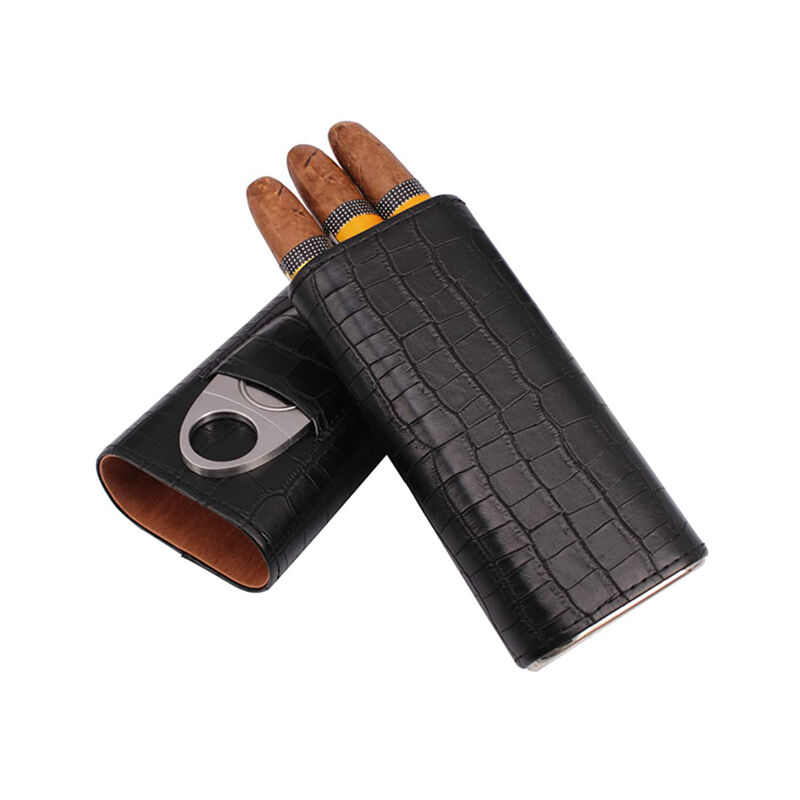
Manufacturers serving wholesale markets face a critical challenge: producing cigar jars that maintain their integrity, functionality, and aesthetic appeal over extended periods while meeting the demanding standards of bulk buyers. The longevity of cigar jars directly impacts customer satisfaction, brand reputation, and repeat business relationships in competitive wholesale environments. Understanding the manufacturing strategies that ensure durability requires examining material selection processes, construction techniques, quality control protocols, and design considerations that address the specific challenges posed by cigars as a preservation-sensitive product category.

The wholesale market presents unique requirements that distinguish long-lasting cigar jars from standard consumer packaging. Bulk purchasers expect containers that withstand frequent handling during distribution, resist environmental stressors during warehousing, and maintain seal integrity throughout extended shelf life cycles. Manufacturers implement systematic approaches to address these expectations, combining advanced material science with proven production methodologies that have evolved through decades of industrial ceramics and container manufacturing experience. This comprehensive examination reveals how leading producers engineer durability into every aspect of cigar jar construction, from raw material preparation through final quality verification.
Material Selection and Preparation Strategies
Premium Ceramic Composition for Structural Integrity
Manufacturers prioritize high-grade ceramic materials that deliver exceptional mechanical strength and resistance to environmental degradation. The selection process begins with sourcing refined clay bodies containing optimal ratios of kaolin, feldspar, and quartz components that create dense, non-porous matrices after firing. These carefully balanced formulations enable cigar jars to resist cracking, chipping, and structural failure under typical wholesale handling conditions. Premium ceramic compositions also prevent moisture migration through container walls, protecting stored cigars from humidity fluctuations that compromise tobacco quality.
The preparation phase involves precise particle size control through grinding and screening operations that ensure uniform consistency throughout the raw material batch. Manufacturers remove impurities and foreign particles that could create weak points or aesthetic defects in finished cigar jars. This meticulous preparation establishes the foundation for products that meet wholesale market durability standards while maintaining the visual appeal that drives purchasing decisions. Advanced suppliers conduct spectroscopic analysis to verify chemical composition consistency across production runs, eliminating batch-to-batch variations that could affect long-term performance.
Glaze Formulation for Surface Protection
Surface durability depends critically on glaze chemistry designed specifically for cigar storage applications. Manufacturers develop proprietary glaze formulations that create hard, chemically resistant coatings capable of withstanding repeated cleaning, accidental impacts, and exposure to varying atmospheric conditions. These specialized glazes contain carefully balanced fluxes, stabilizers, and glass-forming compounds that fuse completely during high-temperature firing, creating protective layers without voids or discontinuities. The resulting surfaces resist staining from cigar oils, maintain their lustrous appearance throughout extended use, and prevent bacterial colonization that could affect stored products.
Leading manufacturers test multiple glaze formulations under accelerated aging conditions that simulate years of wholesale market exposure. These evaluations measure abrasion resistance, chemical stability, and color retention under controlled environmental stressors. Only formulations demonstrating superior long-term performance advance to production implementation. The glaze selection process also considers compatibility with underlying ceramic bodies, ensuring proper thermal expansion matching that prevents crazing or delamination over time. This technical rigor distinguishes professional-grade cigar jars from mass-market alternatives that may deteriorate after limited use.
Advanced Manufacturing Techniques for Durability
Precision Forming Methods
The manufacturing process employed directly influences the structural integrity and dimensional consistency of cigar jars throughout their service life. High-pressure casting and ram pressing techniques create uniform density distributions that eliminate weak zones prone to failure. These controlled forming methods apply consistent pressure across all container sections, compacting ceramic particles into tightly bonded structures with minimal internal voids. Manufacturers calibrate equipment parameters precisely to achieve target density levels that balance structural strength against weight considerations important for shipping economics.
Automated forming systems ensure dimensional accuracy that facilitates proper lid-to-body engagement critical for maintaining seal integrity. Precision tooling produces matching contours between jar openings and closure components with tolerances measured in hundredths of millimeters. This manufacturing consistency enables reliable sealing performance across entire production batches, addressing wholesale buyers' expectations for predictable functionality. Advanced manufacturers implement statistical process control monitoring that detects dimensional drift before it produces out-of-specification products, maintaining the quality standards essential for long-lasting performance.
Controlled Firing Protocols
The firing process represents the most critical phase in transforming raw materials into durable cigar jars capable of withstanding wholesale market demands. Manufacturers employ multi-stage firing schedules that gradually elevate temperatures according to precisely calculated heating rates. These controlled thermal profiles prevent thermal shock damage while allowing complete sintering reactions that fuse ceramic particles into monolithic structures. Typical firing cycles extend over twenty to thirty hours, including carefully managed heating, soaking, and cooling phases that develop optimal material properties.
Peak firing temperatures typically range between twelve hundred and thirteen hundred degrees Celsius, sufficient to achieve vitrification without causing warping or deformation. Manufacturers maintain strict temperature uniformity throughout kiln chambers using advanced burner configurations and circulation systems that eliminate hot spots. This thermal consistency ensures that all cigar jars within a production batch achieve identical material properties regardless of kiln position. Post-firing inspections verify proper sintering through density measurements and visual examination for surface defects that could compromise long-term durability.
Seal System Engineering for Extended Performance
Lid Design and Manufacturing Precision
Long-lasting functionality of cigar jars depends fundamentally on seal systems that maintain airtight closures throughout repeated opening and closing cycles. Manufacturers design lid components with precision-ground seating surfaces that create consistent contact with jar rims. The grinding process removes microscopic irregularities that could create leak paths, producing smooth, flat mating surfaces. Advanced producers employ diamond-tooling operations that achieve surface finishes measured in micrometers, ensuring intimate contact across the entire seal perimeter.
Material selection for lid components considers thermal expansion characteristics that match body materials, preventing seal degradation due to differential expansion during temperature fluctuations. Manufacturers test lid-body combinations under cyclic temperature variations that simulate seasonal climate changes and shipping temperature extremes. Only designs maintaining seal integrity throughout these accelerated life testing protocols advance to wholesale production. The engineering investment in seal system development directly translates to extended service life that justifies premium positioning in competitive wholesale markets.
Gasket Integration and Longevity
Many manufacturers enhance seal performance through integrated gasket systems using food-grade silicone or similar elastomeric materials. These gasket components compress against ceramic sealing surfaces, compensating for minor dimensional variations while providing positive sealing force. Material specifications for gaskets emphasize compression set resistance, ensuring that sealing elements maintain elasticity after thousands of compression cycles. Manufacturers source gasket materials with proven chemical compatibility with cigar storage environments, preventing degradation from exposure to tobacco oils and humidification systems.
Installation processes position gaskets in precision-machined grooves that maintain proper compression geometry throughout the product lifecycle. Adhesive systems secure gaskets against displacement during shipping and handling, while allowing replacement if needed after extended service periods. This serviceability consideration extends the practical lifespan of cigar jars by enabling seal component renewal without replacing entire containers. Wholesale buyers particularly value this design approach, as it reduces lifecycle costs while maintaining consistent performance standards across large container inventories.
Quality Control Systems Ensuring Wholesale Reliability
Multi-Stage Inspection Protocols
Manufacturers implement comprehensive inspection sequences that evaluate cigar jars at critical production stages before wholesale distribution. Visual inspection procedures identify surface defects, glaze irregularities, and dimensional anomalies that could affect long-term performance or aesthetic appeal. Trained quality personnel examine each container under controlled lighting conditions that reveal subtle defects invisible under standard illumination. Rejection criteria established through customer feedback and field performance data ensure that only containers meeting stringent standards reach wholesale channels.
Dimensional verification employs precision measurement equipment that confirms critical specifications including rim flatness, lid fit, and wall thickness uniformity. Automated gauge systems measure multiple points across each container, generating statistical data that reveals process trends before they produce non-conforming products. Manufacturers maintain detailed inspection records that enable traceability and support continuous improvement initiatives. This systematic quality approach builds the reliability reputation essential for sustained success in demanding wholesale markets where product failures generate disproportionate negative consequences.
Performance Testing and Validation
Beyond dimensional verification, manufacturers subject cigar jars to functional testing that simulates real-world usage conditions encountered in wholesale distribution and end-use environments. Drop testing evaluates impact resistance by subjecting samples to controlled falls onto hard surfaces from specified heights. These tests identify structural weaknesses that might not appear during visual inspection but could cause field failures. Manufacturers analyze failure modes and implement design modifications that enhance impact resistance without compromising other performance characteristics.
Seal integrity testing employs pressure decay methodology or vacuum hold measurements that quantify leak rates under controlled conditions. Samples maintaining specified pressure differentials over extended test periods demonstrate adequate sealing performance for long-term cigar preservation. Manufacturers establish acceptance criteria based on the humidity retention requirements of premium cigar storage, ensuring that wholesale customers receive containers capable of maintaining optimal preservation conditions. This testing discipline distinguishes professional manufacturing operations from producers relying solely on appearance-based quality assessment.
Design Considerations Extending Service Life
Ergonomic Features Reducing Handling Damage
Thoughtful design details significantly influence the practical durability of cigar jars in wholesale applications where containers experience frequent handling during inventory management and retail display. Manufacturers incorporate features like reinforced rim sections and smooth, rounded edges that resist chipping during contact with hard surfaces or adjacent containers. These design elements require minimal additional material while substantially improving damage resistance throughout distribution chains. Ergonomic lid grips facilitate secure handling, reducing the likelihood of accidental drops that could compromise container integrity.
Base designs incorporate stability features such as slightly recessed centers or weighted bottoms that lower center of gravity, reducing tip-over incidents. Manufacturers analyze typical display configurations and storage arrangements to optimize geometric proportions that enhance stability without sacrificing aesthetic appeal. This user-centered design approach acknowledges that real-world durability depends not only on material strength but also on geometric configurations that minimize stress exposure during normal handling. Wholesale buyers increasingly recognize these subtle design refinements as indicators of manufacturing sophistication that predicts reliable long-term performance.
Finish Durability and Maintenance Considerations
Surface finish selection balances aesthetic objectives against practical maintenance requirements that affect perceived quality throughout extended service periods. Manufacturers offer various finish options including high-gloss, satin, and matte treatments, each presenting distinct durability characteristics. High-gloss finishes maximize visual impact but may show handling marks more readily than textured alternatives. Satin and matte finishes provide superior resistance to visible wear while maintaining sophisticated appearances appropriate for premium cigar storage applications.
Cleaning compatibility represents another critical finish consideration, as cigar jars require periodic maintenance to remove dust and preserve appearance. Manufacturers test finish formulations against common cleaning agents to ensure resistance to chemical degradation and surface dulling. Finishes demonstrating compatibility with mild detergents and disinfectants without losing luster or developing surface defects provide extended service life with minimal maintenance requirements. This practical durability consideration addresses wholesale market expectations for products that maintain showroom appearance throughout years of regular use and cleaning.
FAQ
What manufacturing factors most significantly impact cigar jar longevity in wholesale applications?
The most critical factors include ceramic body composition determining structural strength, glaze chemistry affecting surface durability, firing temperature profiles ensuring complete sintering, seal system precision maintaining airtight closures, and quality control rigor identifying potential failure modes before distribution. Manufacturers achieving excellence across these interconnected factors produce cigar jars capable of withstanding wholesale market demands throughout extended service periods. Material selection and firing protocols establish fundamental physical properties, while seal engineering and quality systems ensure consistent performance across production batches.
How do manufacturers test cigar jars to verify they meet wholesale durability standards?
Comprehensive testing protocols include dimensional verification using precision measurement equipment, impact resistance evaluation through controlled drop testing, seal integrity assessment via pressure decay or vacuum hold measurements, thermal cycling to simulate environmental stress exposure, and accelerated aging studies that compress years of service into compressed timeframes. Manufacturers establish pass-fail criteria based on field performance data and customer requirements, ensuring that only containers demonstrating adequate durability reach wholesale distribution channels. Statistical sampling plans balance testing thoroughness against production efficiency requirements.
Why do ceramic materials dominate long-lasting cigar jar manufacturing for wholesale markets?
Ceramic materials offer exceptional combinations of properties essential for durable cigar storage including moisture impermeability preventing humidity exchange, chemical inertness avoiding flavor contamination, thermal stability maintaining performance across temperature ranges, mechanical strength resisting handling damage, and aesthetic versatility supporting diverse design expressions. These inherent material advantages, combined with mature manufacturing technologies producing consistent quality at competitive costs, position ceramics as the preferred material system for wholesale cigar jar applications. Alternative materials like plastics lack the premium perception and long-term stability required for serious cigar preservation, while metals present weight and potential reactivity concerns.
What role does seal system design play in determining cigar jar service life?
Seal system effectiveness directly determines whether cigar jars maintain the controlled humidity environments essential for tobacco preservation throughout extended periods. Poor seal design allows humidity exchange that degrades stored cigars, creating customer dissatisfaction that damages wholesale relationships regardless of other container qualities. Manufacturers invest substantial engineering resources optimizing seal geometries, material selections, and manufacturing tolerances that ensure reliable performance across thousands of opening and closing cycles. Seal system durability often determines practical container lifespan more significantly than structural body integrity, making this subsystem a critical focus area for manufacturers targeting demanding wholesale markets.
Table of Contents
- Material Selection and Preparation Strategies
- Advanced Manufacturing Techniques for Durability
- Seal System Engineering for Extended Performance
- Quality Control Systems Ensuring Wholesale Reliability
- Design Considerations Extending Service Life
-
FAQ
- What manufacturing factors most significantly impact cigar jar longevity in wholesale applications?
- How do manufacturers test cigar jars to verify they meet wholesale durability standards?
- Why do ceramic materials dominate long-lasting cigar jar manufacturing for wholesale markets?
- What role does seal system design play in determining cigar jar service life?